
Why Rural Sicily Is Good for Your Mental Health: A Psychologist’s PerspectiveExplore how nature, meditation and massage may help people recognise and release emotional tension. This article examines the relationship between therapeutic touch, Traditional Chinese Medicine, the nervous system and emotional well-being while highlighting the restorative environment of Vista Alcantara Mountain Wellness Retreat in Sicily.
There are moments in life when exhaustion cannot be explained by physical activity alone. A person may sleep for eight hours and still wake feeling depleted. Another may complain of persistent tension in the shoulders, stiffness in the neck, digestive discomfort, headaches, or a vague sense of heaviness that seems impossible to describe. Medical examinations may reveal very little, yet the symptoms remain. In many cases, the body appears to be carrying a burden that words alone cannot fully explain. This raises an important question. Can emotional experiences become so deeply embedded in our daily lives that they begin to influence the way we feel physically? More importantly, can spending time in nature, embracing periods of silence, practising meditation, and receiving therapeutic touch help us reconnect with ourselves and release some of that emotional burden?
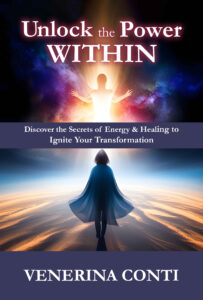
Modern science increasingly recognises the intricate relationship between the mind and the body. Thoughts influence hormones, hormones influence behaviour, and behaviour influences physical health. The nervous system, the immune system, and the endocrine system communicate continuously, responding not only to external events but also to our perceptions, beliefs, memories, and emotional experiences. This relationship between thoughts, emotions, and physical well-being forms a central theme in Unlock the Power Within, which explores the profound connection between the mind, healing, emotions, and health. Entire chapters are devoted to understanding how thoughts and emotions influence the body and how restoring balance requires us to view health through a broader and more holistic lens.
At the same time, From Victim to Victory introduces another important concept that has become the foundation of the V2V methodology. The book proposes that people are not broken but adapted, and that many of the emotional and behavioural patterns that create difficulties in adulthood originally developed as intelligent responses to particular circumstances. Anxiety, withdrawal, overthinking, emotional numbness, and many other reactions may have once served an important protective function. Rather than viewing these responses as evidence of weakness, the V2V model encourages us to understand them as adaptations that emerged in the service of safety, belonging, and survival.
When viewed together, these two perspectives create an interesting framework for understanding emotional health. If our thoughts and emotions influence physical well-being, and if many of our emotional responses represent adaptations rather than defects, then it becomes easier to understand why physical symptoms sometimes persist long after the original emotional challenge has passed. The body may continue responding to experiences that the conscious mind believes have already been resolved.
As a holistic therapist, I have observed this phenomenon repeatedly over many years of working with people from different countries, cultures, and backgrounds. Individuals often arrive for a treatment because they believe they have a muscular problem. They describe tightness in the neck, discomfort in the lower back, pain in the shoulders, or persistent tension in the hips and legs. Initially, the conversation revolves around posture, physical activity, or occupational strain. However, as the treatment progresses and the tissues begin to soften, another story often emerges.
Sometimes, a person who has carried tension in the shoulders for years begins talking about responsibilities that have become overwhelming. Someone experiencing discomfort around the chest and upper back may reveal that they have recently experienced grief or loss. Tension around the jaw may be accompanied by stories of frustration, unresolved conflict, or prolonged stress. Tightness in the abdomen may coincide with periods of anxiety and uncertainty.
This does not mean that every physical symptom originates from emotional causes, nor does it suggest that massage can diagnose emotional distress. Physical symptoms should always be evaluated appropriately, and no responsible therapist should overlook the importance of medical assessment. Nevertheless, after years of practice, it becomes difficult to ignore the patterns that repeatedly appear. The body often communicates information that the individual has not yet fully recognised.
Traditional Chinese Medicine has approached this relationship for thousands of years through a model based on the movement of energy throughout the body. According to this perspective, energy flows through interconnected pathways, and disruptions within these pathways may eventually contribute to imbalance and discomfort. Emotions are not considered separate from physical health but are viewed as essential components of it. Although modern medicine and Traditional Chinese Medicine rely on very different explanatory models, both recognise that emotional experiences influence physiological processes.
From an energetic perspective, dis-ease does not necessarily begin in the physical body. It may originate much earlier within thought patterns, emotional responses, energetic imbalances, and the subtle ways in which individuals interact with themselves and the world around them. A persistent worry becomes chronic stress. Chronic stress influences sleep. Poor sleep affects hormonal balance. Hormonal changes alter metabolism, digestion, immunity, and energy production. What began as a thought gradually manifests throughout multiple systems within the body.
Whether we describe this process using the language of neuroscience or the language of energetic medicine, the observation remains remarkably similar. Emotional experiences influence physical health.
One of the greatest challenges of modern life is that we rarely create the conditions necessary to recognise this connection. We live in an environment characterised by speed, stimulation, and constant distraction. We wake up and immediately reach for our phones. We answer messages while drinking our morning coffee. We consume information continuously throughout the day. Even our periods of rest are frequently filled with noise, screens, and interruptions.
From Victim to Victory explores this modern dilemma in considerable depth, suggesting that we are living in a historical period defined by comparison, information overload, and relentless pressure. Achievement is often valued more highly than meaning, while productivity frequently takes precedence over authenticity. Within this environment, many people gradually become disconnected from themselves. They continue functioning, fulfilling obligations, and meeting expectations while simultaneously losing touch with their own emotional needs.
Silence has become unfamiliar to many of us because silence removes distractions. Without distractions, we are left alone with ourselves. Yet healing frequently begins in silence and when we are alone.
Nature has an extraordinary ability to create this silence without imposing it. A mountain landscape does not demand attention in the same way as a mobile phone. An olive grove does not compete for our focus. A panoramic view does not interrupt us with notifications. Instead, nature invites us to slow down.
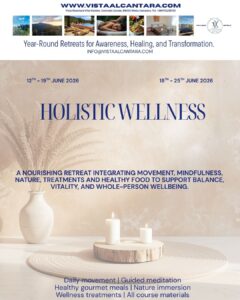
At Vista Alcantara Mountain Wellness Retreat, this slowing down often occurs naturally. Surrounded by vineyards, olive trees, birdsong, the Alcantara Valley, and the ever-present silhouette of Mount Etna, many guests discover something they have not experienced for years. They become aware of themselves again.
Initially, this can feel surprisingly uncomfortable. The absence of constant stimulation creates space for thoughts and emotions that have been ignored for months or even years. Without the usual distractions, many people suddenly recognise how tired they have become. Others realise they have been functioning on autopilot. Some discover that they have not sat quietly with themselves in a very long time.
Here at Vista Alcantara, in Sicily, nature creates the conditions for awareness. Meditation deepens that awareness. Massage reconnects us with the body. Together, these practices create an environment in which emotional experiences can be acknowledged rather than avoided.
Meditation is often misunderstood as a technique designed to eliminate thoughts. In reality, meditation encourages observation rather than suppression. Instead of attempting to silence the mind, we learn to witness thoughts without becoming entangled in them. We develop the ability to observe emotions without immediately reacting to them.
This approach mirrors the philosophy underlying the V2V methodology. According to From Victim to Victory, genuine transformation does not begin through force or self-criticism. It begins through understanding. The nervous system does not soften under condemnation. It responds to safety. Real healing cannot develop within an atmosphere of self-rejection. It requires a gradual rebuilding of trust between awareness, memory, emotion, and the body itself.
Meditation encourages this rebuilding process by teaching us to remain present rather than escaping from difficult experiences. Instead of immediately trying to fix ourselves, we become curious about ourselves. We learn to ask different questions. What am I feeling? Why am I reacting this way? What might my body be trying to communicate? These questions create space for understanding, and understanding often reveals that our reactions make far more sense than we initially believed.
Massage contributes to this process through an entirely different pathway. Therapeutic touch encourages us to reconnect with physical sensations that we often ignore. During a massage, muscular tension becomes impossible to overlook. Areas of tightness, restriction, and discomfort begin to reveal themselves. As a therapist, I frequently use these observations to initiate conversations. Where are you carrying tension? How long has it been there? What was happening in your life when it first appeared?
Sometimes, people immediately recognise a connection. Sometimes, they do not.
Occasionally, a treatment leads to a profound emotional release. Tears may appear unexpectedly. Memories may surface. Long-forgotten experiences may suddenly become accessible. However, emotional release does not always present itself dramatically. More often, it manifests as relief. The breathing becomes deeper. The shoulders relax. The facial muscles soften. The body simply lets go.
This process should never be romanticised or exaggerated. Massage is not a miracle cure, nor should emotional release be viewed as a requirement for successful treatment. Nevertheless, therapeutic touch creates opportunities for awareness that many people never experience in their everyday lives.
Perhaps the greatest gift offered by both meditation and massage is permission to stop. To stop striving. To stop performing. To stop distracting ourselves. To stop running. Within this stillness, emotions that have been buried beneath responsibilities and obligations may finally have an opportunity to emerge.
The V2V methodology repeatedly emphasises that protective patterns develop for understandable reasons. Anxiety increases vigilance. Withdrawal reduces exposure to emotional pain. Emotional numbness limits overwhelm. These adaptations represent intelligence within the system, even when they eventually become restrictive. The challenge is not to fight these adaptations but to understand them. When we understand why a pattern formed, we can begin loosening its hold without attacking ourselves in the process.
Nature, meditation, and massage all facilitate this understanding in different ways. Nature restores rhythm. Meditation cultivates awareness. Massage reconnects us with the physical body. Together, they create the conditions necessary for reflection, observation, and self-discovery.
This is one of the reasons retreats can be so transformative. A retreat is not simply a holiday in a beautiful location. It is an opportunity to step outside familiar routines and reconnect with forgotten parts of ourselves. It creates a space in which emotional experiences can be acknowledged rather than avoided.
Modern life rarely encourages introspection. We are taught to continue moving, to remain productive, and to keep going regardless of how exhausted we feel. Unfortunately, emotional burdens do not disappear simply because we ignore them. They remain present beneath the surface, influencing our thoughts, our relationships, our health, and our physical well-being.
Perhaps this explains why so many people return from time spent in nature feeling lighter, calmer, and more grounded. The landscape itself has not changed them. The silence has not magically solved their problems. The massage has not erased every emotional wound.
What has changed is their relationship with themselves. They have listened. They have paused. They have become aware. Sometimes, that awareness is enough to begin a process of transformation.
At Vista Alcantara, I have often witnessed guests arrive believing they needed nothing more than rest, only to discover that what they truly needed was reconnection. The mountains, the silence, the meditation practices, the therapeutic treatments, and the simple act of spending time away from everyday demands often create opportunities for insights that would never have emerged within the noise of ordinary life.
Perhaps emotions are not literally trapped inside muscles and tissues. Yet our experiences unquestionably influence the body, and the body frequently communicates what the mind has not yet fully acknowledged.
Our posture tells stories. Our breathing reveals hidden tension. Our muscles reflect our burdens. Our physical symptoms sometimes carry messages that words fail to express. The challenge is finding the courage to become still enough to listen.
And perhaps that is the true purpose of a wellness retreat. It is not an escape from life but an invitation to return to ourselves, to rediscover the healing potential of silence, nature, movement, and therapeutic touch, and to remember that the journey toward well-being does not begin by fixing what is broken. It begins by recognising that we were never broken in the first place. We were simply adapting, and with patience, awareness, and compassion, those adaptations can gradually become pathways toward healing, balance, and renewal.